
 Spotify

 iHeartRadio

 Amazon Music

 Apple Podcasts

 Pandora

 Youtube Music

 PlayerFM

 Overcast

 PocketCasts

 Goodpods

 Podyssey

 Audible

 Podchaser

 RSS Feed
Dr. Deborah Heiser on The Mompreneur Model with Dori DeCarlo
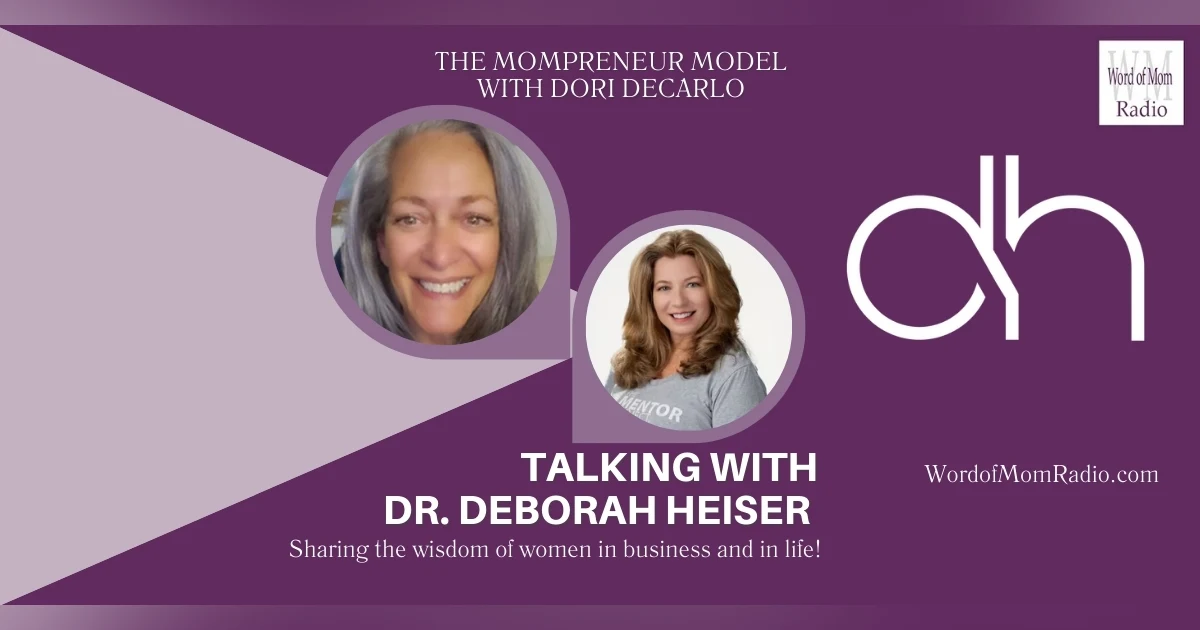

Dr. Deborah Heiser is the CEO/Founder of The Mentor Project.
Dr. Deborah Heiser is the CEO/Founder of The Mentor Project, author of The Mentorship Edge, and an Applied Developmental Psychologist. She has been featured at TEDx, Marshall Goldsmith 100 Coaches, Thinkers 50 Radar List, Psychology Today and is also an Adjunct Professor in the Psychology Department at SUNY Old Westbury.
Join host Dori DeCarlo on The Mompreneur Model and connect with Dr. Heiser at DeborahHeiser.com and on LinkedIn. Find out more and become a mentor at MentorProject.org.
Please support UnsilencedVoices.org a global 501(c)3 nonprofit that empowers survivors of domestic violence, sexual assault, and human
trafficking. We thank Smith Sisters and the Sunday Drivers for our theme song, "She is You".
Be sure to connect with us on BlueSky, Facebook, Instagram, Twitter, and come tell us your story!
WordofMomRadio.com - sharing the wisdom of women, in business and in life.
Become a supporter of this podcast!
0:00 She is sure, she is sure, she is strong, she is true, is true, she is brave Bray, she is she is you, is you, she is she is sure, she is true. She is strong. She is strong, she is true, is true, she is brave Bray, she is she is you. Hello, everyone, Welcome to today's Word of Mom Radio. Here on the Word of Mom Media Network. I'm your host, Dori Di Carlo. And you know we're here a week after week, show after show breaking those myths that morepreneurs and business women, especially those of us building our businesses from home. You know that we're just dabbling in between bake sales and getting our nails done. We're not. We are smart, we are savvy, and we are sharing the wisdom of women in business and in life. And I'm really looking forward to bringing today's guest into our show.
0:59 Doctor Jebra Heiser is the CEO and founder of The Mentor Project, author of The Mentorship Edge, and an applied developmental psychologist. She has been featured at Tedex Marshall Goldsmith's one hundred Coaches, Thinkers fifty, Radar List, Psychology Today, and is also an adjunct professor in the psychology department at sunny Old Westbury. And I could go on and on and tell you about her, but I'd much rather bring her in. So, with that being said doctor Deborah Heiser, welcome to Word of Mom Radio. Well, thank you. I'm delighted to be here. I'm excited to have you. So I would love for you to take us on your journey that led you to creating the Mentor project.
1:47 Sure, well, it started when I was starting out as a researcher. I wanted to study aging. And when I thought of aging, it was everything that no one wants to have her get. So studying depression, frailty, Alzheimer's disease, and this is how I got my start. And then I went out and somebody said to me, Hey, what do we have to look forward to? Is anything you're doing mattering for what we have to look forward to as we get older. Is it just frailty with a band aid on it? Is it just depression with a band aid on it? And I really had to stop and think, and I said to myself, oh my, I don't know if this is the future I want. I want to know what I have to look forward to also, so I pivoted and looking at our lifespan.
2:34 I didn't know there was so much good stuff. And right in the middle when we hit midlife, is this stage called generativity, and it's where we're built to want to give back without expecting anything in return. And any mom out there understands this really well, because when you get up and the little baby cries, you don't say you better do something for me later. You know if you are caring for that person without expecting anything in return from them. And it really hits again in midlife, right around fifty is when it said it's really hitting for most of us, and in that we want to engage in mentoring, volunteering, and philanthropy ways that we can give ourselves back to others. And I was like really, So I took a dive into looking at mentorship because I thought, well, for giving a piece of yourself back to somebody else, what does that look like? Why would a mentor want to do that? And I started interviewing mentors who were from grandmas to four star generals to see what they were really saying about it. Why would they want to do it? I couldn't imagine what was the driving force because the research was saying that we have this.
3:44 Built in drive like walking and talking just to do it well. It turned out they all said things like they needed to feel relevant. They wanted to feel like they had value in the world, that they were useful, that they had something that was important in them, that they hadn't just checked a lot of boxes in their life, and that what they were giving back was needed in the world. It made their footprint a little bit deeper. So when I talked to them, there were a couple of people who said, I have a really hard time finding mentees. And these were people that changed the world. One of them was one of the fathers of the network firewall. His name is Bill Cheswick, and he said, I'm getting ready to go live on a farm, and I'm retiring from Bell Labs as an innovator, and I'm not going to have any access to students to give back to.
4:35 And it wasn't like he could go to a park and say, hey, kid, you want to mentor He had this problem, and so we said, well, let's see if we could get Bill into some schools. We started with a few people and at worked they even had Chez Day on Wednesdays, and we had a couple of other really cool people from NASA and other researchers. They were going into schools and the kids loved it, and the people were mentoring loved. It, and we thought that was going to be it. But we decided to. Form a company, and it was thought it would be ten people, that would be all it would be. And everyone said, no one will ever want to join to you band of weirdos going out and doing this, because people who are really top level are too busy for this kind of thing, they're too important for it. And I said, okay, good, then it'll just be us. I'm happy with that.
5:22 I'm fine. And it turned out that within six months we moved from ten to sixty, then to eighty, then to one hundred, and we're talking top notch people, astronaut six, seven time Nobel Laureate nominee, artists, everybody from soup to nuts was saying I want to join. So that's how we got formed, really by accident, really just organically, and we've been moving ever since. We're five years old now, and just last year we were able to give away three million dollars of mentorship out hours to students in five countries, so you know, it's just fun. How things that were built to do happen when you just ignite a little flame.
6:07 It's amazing to me that people thought people wouldn't want to give back, and I find that incredulous. I truly do. I know. I don't know anyone who has attained a certain level, and even before they've gotten there, that hasn't wanted to help other people move forward. You're right, but most people don't think that. They think only if you think of mentorship. Most people think of the mentee looking to climb the lower They say, go find a mentor, and that person's a nameless, faceless individual out there. They can't describe who that person is. They're just like a hand grabbing them up. And that is why they couldn't imagine anyone would want to do this, because there has been such a difficulty for mentees to find a mentor. It's just that no one ever realized that mentors were having the same problem. They had no way to get in touch with mentees. And mentorship is mentor driven, it's not menty driven.
7:06 You know. The mentor's the one with the knowledge, expertise, the values, the culture, all of that stuff that the mentee wants. So we had it backwards, and that's why we've been having so many problems. Is that you can't drive something by someone saying I want and they don't know who that person is. It has to be driven by the experts who can say I have all of this, who wants it? It's free, come take. Why do you feel it is so important for the mentor to be part of this mentorship? It's incredibly important because imagine yourself in midlife and you've checked all the boxes. You've done everything you were supposed to do. You got your job, you had your kids, you did whatever you were going to do, and then you say to yourself, now, what more boxes?
7:53 I get to check more boxes? This is the. Time when you want to say I have meaning in the world, that I matter. Mentorship allows you to feel that you feel relevant. You are changing somebody's life, you're making their life better, You're moving something in the direction that you want to move it to. So mentorship is you get to choose who you mentor how you mentor when you mentor where you mentor you get to choose all of that, and that's what allows the mentors to feel like they're useful, productive, that their footprint matters. They have a legacy that they are relevant. There's nothing more scary to a person than feeling like you're isolated, alone, disconnected, and irrelevant. There's nothing like that is like being put in a room with no lights and no windows and the door is closed. So this is what allows us to feel as mentors, like we're an important part of life.
8:53 Everything that you're doing. And so far as being able to match people up. Do you find that there's a commonality when you create that mentor mentee relationship or are they just all so completely different? You know, the commonality is that people are looking for a meaningful connection. That's really what the commonality is. It doesn't work if somebody is coming in and they're saying, I want information. I don't care who it is, I'm just looking to get a grab. Mentorship can be a one off, but it really is the biggest commonality is that people want a meaningful connection. The mentee often does they want somebody who doesn't like somebody in their corner who's really working to make it so their life is better For the mentor who doesn't want somebody that says, everything you're giving me is so wonderful. Just what I've wanted, Thank you, Thank you. Who doesn't want that. It's like saying that an actor gets on stage and doesn't want applause, They like, you know, a silent room at the end.
9:50 It's the same exact sort of thing. And that's really what the commonality is is drive for meaningful connection from everybody. We all want it at all times. There's nobody who goes through life and says, oh, I want to be disconnected or I just want to get what I. Want and go. We all want to feel connected and needed, and we have that with mentorship. There's the need of the mentee to get the information. There's the need of the mentor to have somebody want that information that they have to feel important and relevant. Do you find that there's in today's world kind of a niche that people are looking at when looking for mentorship or is it really across the board in all kinds of fields.
10:32 Oh, you need mentorship and everything. If you think about the biggest way that we've mentored in this universe, in this planet is through culture. That's how religion has been passed down for centuries. It doesn't matter which one you subscribe to. It has been passed down by mentorship for thousands of years. In the book, I talk about religion and I have a professor, Christopher Baldo talk about mentors from the Bible, Old and New tests and things like that. And it's been in every kind of a scripture that is out there. That's how it gets passed down. We're never going to remember an accountant three hundred years ago that was in the local job, but we are going to remember the traditions that have been passed down the values that matter to us. Those sorts of things are the ones that are really really meaningful to us as mentors and mentees. So is there a niche, Yes, there is.
11:28 There are some people who say I need something specific or I have a very specific job. Like if you're an astronaut, that's pretty specific, you know. But if you're somebody who's you know, doing world peace, that might be broader and you can get a few more people in that area. If it's art that that's an area that has a little bit more broadness to it. So it really depends on what you're looking at. On that note, I want to take a quick break, say thank you to our sponsors. Then I want to talk about what makes a good mentor and mentor and everything else. Because I think this is something that's going to resonate with our audience. So we'll be back here in just a moment on Word of Mom Radio.
12:10 She is brave, she is bold, she is you, and we want to tell your story. Are you ready to share your journey with us on Word of Mom Radio? Go to wordommradio dot com and register as a guest. We want to tell your story because when you win, we all win. In twenty seventeen, Unsilenced Voices was formed to help survivors of domestic abuse and gender based violence worldwide. The organization currently serves Siri Leone, Rwanda, Ghana, and the USA. In twenty twenty two, Unsilenced Voices gifted over thirty three thousand dollars to survivors in the USA and in Siri Leone.
12:56 There are over twenty six young girls who have been rescued from sex trafficking and domestic abuse and now going through vocational training school in order to better their lives. We need your help. Donations are critical in order for us to continue our work. We also need volunteers to help with research and development. Please visit Unsilenced Voices dot org for more information. And we're back here on Word of Mom Radio. I am talking with doctor Deborah Heiser, the CEO and founder of the Mentor Project. And again, as somebody who has been a mentor for so long in so many different aspects of things that I have done, I think it is so important to find what makes a good mentor.
13:51 So I am going to ask you that, doctor Heiser, what really makes a good mentor. So I'm going to say something that a lot of people think, Huh, that's weird. There's either a mentor or not a mentor. There's no good mentor or bad mentor. Like I've heard people say, oh my gosh, I have a toxic mentor. Well they're not your mentor. They're just not your mentor. So let me give you the definition of it, because then it makes a lot of sense. So you really need five things to make mentorship happen, and it has to be with the mentor and the mentee. First, you need generativity. You need a mentor to be able to say I have something to give, right, I'm if you're a theater or if you're an astronaut, you say I want to give something like engineering or a skill that's needed on stage. Anybody want it. Now, If you say anybody want it and nobody comes along wanting it, there's no mentorship. If somebody comes along and they say, oh my gosh, that's just what i've been looking for, Thank you, I'd love to receive that information that you're giving out. Great, that's the first step. Second step is that you need to have it be an intrinsically motivated thing.
15:00 So if you're getting paid, you're not a mentor. You're an advisor, you're a coach, you're something else, but you're not a mentor. And this gets mixed up a lot in the workplace where somebody is told they better be a mentor to somebody, and then it just becomes a burden at work and it feels like it doesn't work then because they feel like they have to meet up with somebody. The mentor feels like I don't really like the person, but you know, okay, I have to do it or I'll get in trouble. So you need an intrinsic motivator, which is I want to do this because I love it, not because you're going to get upgrade or a bonus or somebody knows that you're going to do it, or a reward, nothing like that. The next thing is that it has to be a meaningful connection.
15:41 And we know what this feels like. Imagine somebody comes across you know your way, and you like them enough, but you don't really like them enough to hang out with them. You know, this is how friends work. You're not friends with every person who crosses your desk, even though they might be nice, wonderful people. So with mentorship, that's the same thing. You have to really if you're a mentor, care about that person that you're mentoring so that you want to see that they get the information. And if you're the mentee, you have to care that you are taking their information and you're doing what they expect you to be doing with it, not that you're just running away with it. The second to last thing is trust. Imagine not trusting the person you think, maybe you're an entrepreneur, I'm going to tell them this information, They're going to run away and they're going to start their own business with it.
16:27 They're going to steal all my ideas. Or you think I'm not going to tell Dory what I know or that I don't know something because she's going to go tell everybody, and I'm not going to get the rays I want. I'm not going to get the promotion. Maybe I'll even get fired if she finds out my vulnerabilities. So we have to have that trust in both ways, which really comes from the meaningful connection. And then finally, there has to be a goal. So if you're just just chatting your friends, if you have a goal. It could be a one off goal, Hey, I need to know the lay of the land of this place. Can you tell it to me? Can you guide me through it? Or it could be something that's an ever changing moving goal that is drawn out over decades. So really there is no bad mentor. It just stops being mentorship.
17:13 If along the. Way somebody steals your idea, they weren't a bad mentor they were never your mentor if somebody you know it feels like somebody's mean to them or bullying them or trying to get things from them, they're not your mentor they're not your mentee. It's just not mentorship. So that's in the book, and I really get into that and defind that because that has been something that has talked about all the time, Like mentors, there's some added burden, like you should be an inspiring mentor. Every person who mentors someone who has a mentee, that mente finds them inspiring. You don't have to tap dance, you don't have to go learn a new skill in order to be a mentor. You have to be yourself and that person who is going to find you valuable will find you inspiring. So don't change yourself. Don't be a person, be yourself.
18:02 So I'm gonna now flip it. What makes a good mentee. The exact same things that went into it. So a mentee if they are coming in and saying, I just want to get a raise, I want to get promoted. I need somebody who's going to boost me up. You're not looking for a mentor, you're looking for a sponsor. So a sponsor is somebody who really is supposed to be opening doors for you. They talk behind your back and they say, have you seen Dory? This is when you're in not the room. She's amazing. You ought to hire her for this, you ought to bring her in for that. You're looking for the wrong thing. You're looking for a sponsor. So a mentee is somebody who is really if they're a good mentee, they're saying, Wow, Dory's giving me this information that I've been wanting. I am going to use this and I'm going to make her proud.
18:46 I'm going to be somebody that takes this on and carries this further. Because really, we're as a mentee, we're the legacy of that person. We are carrying that person in us. We should take that seriously. So really, that's all it is is those same five things I talked about, which is easy. It feels like being a friend. No one needs a handbook to be a friend. If you have a friend who throws you under the bus, they're not your friend, you say, see, yah, not my friend. And it goes for both ways. There's no hierarchy in mentorship in the sense that you can't have the relationship with one without the other, and the same with friendship. So think about it the same way. You don't need a handbook to be a friend either direction of friendship, but you do need both to make it happen, and mentorship is the same.
19:33 It should feel. Organic like that you should trust that you tell something to this person, whether you're mentee or mentor and that that isn't going anywhere unless somebody wants it to, and that you are always keeping that person in mind as somebody important and valuable. I am wondering if you yourself as a mentor, have you had that person or two that you really look at and go, wow, it was awesome and look at where they are now? Do you follow up with anybody? Yeah, Oh my gosh, you know, it's so cool? Is that? Actually a lot of times people will follow up and contact me and say here's where I am. And that is the most amazing thing to me. Ever, when I see that somebody's you know, either applying to a graduate school and they were hemming and hawing over it and they finally do it, I'm like, yay, big win. It feels as much, you know, when you give a gift to somebody and it's the gift they've always wanted and they open it up and you feel that joy. That's how I feel, like, I oh my gosh, like you can't you can't buy that it even though you just did buy the gift, you know, But that's what it's like.
20:45 And so yes, I feel that when I have some that have common done amazing things, like two students that were doing research work that were high school students. They ended up doing so amazing. We kept thinking, oh, going to drop off anytime, that it's a long haul to do this kind of research that we asked them to do, and they never did, and they ended up getting to be authors on peer reviewed journal articles that were being submitted. They got to help with art with projects that were getting submitted to really amazing top notch conferences. And they were fifteen and seventeen.
21:25 And when I got to see that they did that, it was it made my heart growth three times. It was so amazing. I love that, I really do. I know for me as I see people. I had somebody that I used to give dance lessons to and coach for shows and things like that, and she got her degree in theater and went on to be a theater director. And I'll never forget being at her graduation and saying to her, I hope I'm a little piece of this, and she's like, are you kidding? I wanted to grow up in you. Is that amazing to hear that? It's a wonderful thing when you give your time to a child, to a teenager to somebody who is aspiring to do something. You don't even realize sometimes the difference you can make in someone's life. Yeah, it's so amazing to me. And you mentioned it before, and I'm glad that you clarified it. Mentors are not a correct yes, I you know what. I have heard people say, well, I'll mentor you, but it's going to cost this, and I'm like, that's not mentorship, that's coaching.
22:32 Mm hmm. And there's no devalue in coaching. Coaching. It's great, but there's a difference. And the reason there's a it's so important to differentiate is because you may think that, oh, well I have a coach and a mentor all in one. Well, you just sold yourself short for getting ahead, because we should have multiple mentors. You should have one coach, because then you're going to go crazy thinking well, who was telling me? Those leading me in the right direction. But mentor you should have lateral mentors, the people who are next to you. You should have hierarchical mentors. It should be a spider web of mentorship. And when you think you're getting everything from one person who you're paying to coach you, you've just sold yourself short for all kinds of amazing doors of can open and possibilities that can happen for you.
23:21 I think that's a great statement to close this conversation with, and something that I really hope you've heard doctor Heizer saying, I really do so. As we're wrapping up, what would you like to leave our listeners with and how may they reach out to you? First of all, I'd like everybody to know you can find a mentor. Just look to your left and look to your right. You're looking at somebody who's probably able to mentor you, or who you can mentor. You don't have to look up. You can just look left and right. You can find me at mentor project dot org. And if you have a child, or if you yourself for a student and you would like free mentoring, because mentorship is free, you can go to mentor project dot org and click the become a mentee button. It's available to students around the world for free. You can find me on LinkedIn. You can find me I write for psychology today.
24:15 I have my own website, Deborah Heiser dot com. And you can check out The Mentorship Edge, which is a book that really goes deep into the stories of amazing mentors out there and what mentorship looks like in a lot of different fields. Well, I will have to say, since we didn't talk about the book, if you'd like to send me a copy, I'd love to bring you back. I always respect my guests and want to read their books, so we could actually talk about it. But I think it would be a great book to talk about, absolutely do so I would love to have you back. I really I love it. I think it's really important. Giving back is such a wonderful thing to be able to do, and it doesn't take a tremendous amount of time make a difference for someone.
25:02 You're right, it's the biggest gift we can give ourselves. Honestly, it's that we have immortality and every single person we've helped. I love that because it's really true. I say it all the time that the only time somebody truly has died is when no one remembers them, when there is no one to tell their story or tell how they made a difference for them. So I love the idea of creating that immortality. Doctor Heiser, I want to thank you so much for taking the time to come and join me. Today here on Word of Mom Radio, Thank you, thank you, my pleasure, and for all of you tuning in, I want to thank you so much for being here.
25:42 We're going to close out with our fabulous theme song from Smith's Sisters and the Sunday Drivers. So till next time, this is Dory Di Carlos saying, go out and create a marvelous youth. Bye for now. She is sure, she is sure, she is strong, she is strong, she is true, she is true, she is braise, she is she is you, she is she is, she is sure, she is she is strong, she is strong, she is true, she is true, she is braised, she is bold, she she is you, is you? She is you.
26:23 Sure of herself, Yeah, she takes care of his Powerful and strong. Yes, she knows who she is, has integrity, woman, strong and true. You know her by name. See this woman is you. She is sure, she is strong, is strong, she is true, is true, she is braise, she is she is you, she is she is she is sure, she is strong, is strong, she is true, is true, she is braid, she is she is she is you, she is she is adds value and hope has proved to be brave. See it's never too late, never time to behave Reaching for dreams doesn't matter. The age believes in herself, unleashed from her cage. She is sure. She is sure, she is strong, is strong, she is true, is true, she is brave, she is bold, She is you.
27:23 She is she is she, she is sure, she is she is strong, she is strong, she is true, is true, she is brave, is brave, she is she is you.

Author
Dr. Deborah Heiser is the CEO/Founder of The Mentor Project, author of The Mentorship Edge, and an Applied Developmental Psychologist. She has been featured at TEDx, Marshall Goldsmith 100 Coaches, Thinkers 50 Radar List, Psychology Today and is also an Adjunct Professor in the Psychology Department at SUNY Old Westbury.