
 Spotify

 iHeartRadio

 Amazon Music

 Apple Podcasts

 Pandora

 Youtube Music

 PlayerFM

 Overcast

 PocketCasts

 Goodpods

 Podyssey

 Audible

 Podchaser

 RSS Feed
Barb Nangle on Healthy Habits with Dori DeCarlo
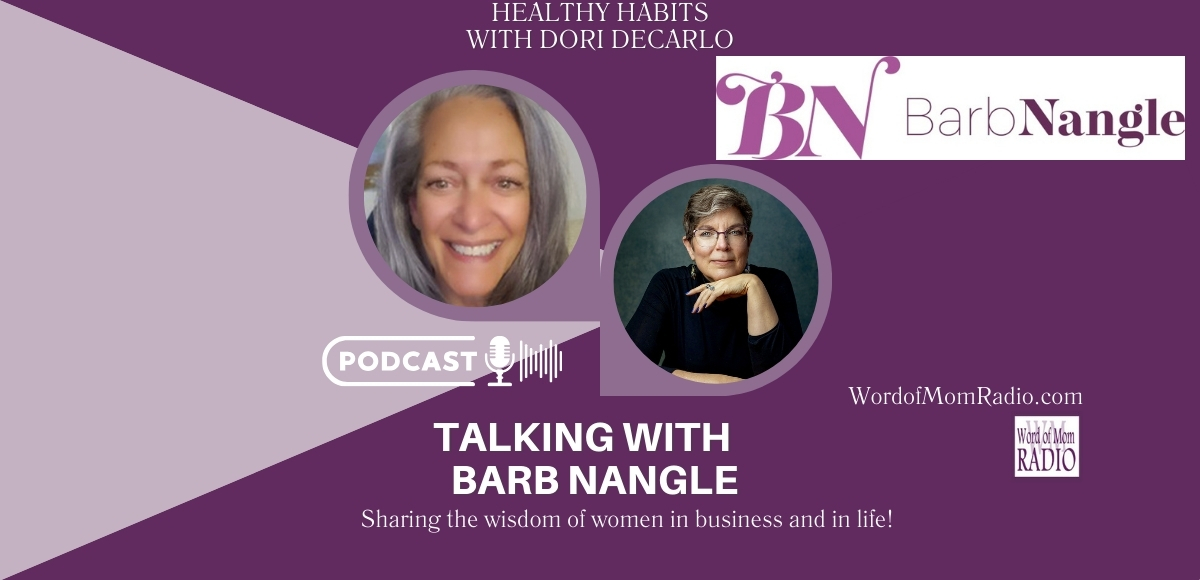
Barb Nangle can help you say 'no' without guilt and shame so you can finally put yourself first and stop stressing about what others think.
Barb Nangle is a boundaries coach, speaker and host of the podcast, "Fragmented to Whole: Life Lessons from 12 Step Recovery." She also offers a free Boundary-Building Starter Kit. In 2015 at the age of 52, after decades of therapy and tons of self-help work in a variety of areas, Barb got into 12-step recovery. She’s been in two such fellowships since then and has changed deeply and profoundly as a result.
As a former addict and people-pleasing rescuer, she empowers people to thrive and take more control over their personal and professional lives by coaching them to build healthy boundaries. Barb works with organizations in the helping professions, as well as women entrepreneurs to avoid burnout and reduce turnover.
Her specialty is working with professional women who say yes when they really want to say no, and are so focused on others that they neglect themselves. She’s coached hundreds using her boundary-building system.
Join host Dori DeCarlo for Healthy Habits and connect with Barb at FragmentedToWhole.com and HigherPowerCC.com. Tune in for her Higher Power podcast and connect with Barb on LinkedIn, Instagram, Facebook and YouTube.
Please support UnsilencedVoices.org a global 501(c)3 nonprofit that empowers survivors of domestic violence, sexual assault, and human trafficking.
We thank Smith Sisters and the Sunday Drivers for our theme song, "She is You".
Be sure to connect with us on BlueSky, Facebook, Instagram, Twitter, and come tell us your story!
WordofMomRadio.com - sharing the wisdom of women, in business and in life.
Become a supporter of this podcast: https://www.spreaker.com/podcast/word-of-mom-radio--5252572/support.
0:00 She is sure, She is true. She is straw straw, she is true, is true, she is brave, bray, she is she is you. Hello, everyone, Welcome to today's Word of Mom Radio. Here on the Word of Mom Media Network. I'm your host, Dori Di Carlo. And you know we are here week after week, show after show, breaking those myths that morepreneurs and business women, especially those of us building our businesses from home. You know that we're just dabbling in between bake sales and getting our nails done. We're not. We are smart, we are savvy, and we are sharing the wisdom of women in business and in life. And you know I love sharing fellow podcasters, So I'm very excited about bringing today's guest into our healthy habits. So. Barb Nagel is a boundaries coach, speaker and the host of the podcast Fragmented to Whole Life lessons from twelve Step Recovery, and she also offers a free boundary building starter hit on her site. In twenty fifteen, at the age of fifty two, after decades of therapy and tons of self work in a variety of areas, Barb got into twelve step recovery. She's been in two such fellowships since then and has changed deeply and profoundly as a result. As a former addict and people pleasing rescuer, she empowers people to thrive and take more control over their boundaries and
1:33 professional lives by coaching them to building healthy boundaries. Barb works with organizations in helping professions as well as women entrepreneurs to avoid burnout and reduce turnover. Her specialty is working with professional women who say yes when they really want to say no and are so focused on others that they neglect themselves. He's coached using her boundary building systems and is out there making a difference. And I can keep on going, but I'd much rather bring Barb in. So with all that being said, Barbed welcome to Word of Mom Radio. Thank you so much, a Dory, I am really excited to be here. As you know from our previous correspondence, I identified very strongly as an entrepreneur. I do a lot of networking with women entrepreneurs. I've coached lots of moms, many of whom are also entrepreneurs, and my experiences, I think especially with women, not that men don't have problem with boundaries, but I know that a lot of women entrepreneurs suck at boundaries. So that means things like they don't charge at least market rate, they don't get rid of toxic clients, employees and vendors, they don't delegate, they don't take good care of themselves. They believe that only they can do it, and they end up getting aren't out.
3:00 So it's really hard to have a thriving business, or to at least sustain a thriving business, if you don't eventually learn how to build healthy personal and professional boundaries. So I'm super excited to be. Here as we're talking about this. You know, so many people deal with guilt and shame because now they're setting boundaries and it's so difficult to do that. So let's talk about what a boundary is and why, especially women, because it really is I've yet to hear about though, what I really feel bad that I charged my clients so much? I know, yeah, never do this, no, So let's talk about that what a boundary is and why it's Yeah.
3:45 Yeah, So boundaries, I think of them as standards or guidelines for your life, and then they're limits that you have for yourself and other people to uphold those standards. So for example, you know, you and I were just talking that. You know, I have years of substance use and a compulsive overeating in my history, so I've basically abused and neglected myself for a long time. So health is a very important value of mine. So I have some health standards. So I have limits for myself, so like I have many, but for example, I don't stay up until all hours of the night the way I used to. I go to bed usually by eleven at the latest because sleep is a foundation for health. A limit I have for other people. I don't allow people to smoke in my house because I live in a healthy household. So that's you know, that's a basic example, and you've actually asked, like, I have top three questions.
4:37 I get, what's a boundary? How do I get rid of the guilt and shame? And then what do I do when people push back? So the guilt and shame? It Actually there's not a quick answer to that, but it's absolutely doable. And the reason it's not a quick answer is because we have to start by figuring out like what matters to me, what's important to me? So when I coach my private clients, I have them do an exercise before we even start to come up with their top five values. And it's not just a list, it's what does this value mean to me? And why does it matter to me? And then they use those values as sort of like guideposts or guardrails for how to make decisions in their lives and where and when to set boundaries. And the reason that helps with the guilt and shame is because we're coming into integrity with ourselves.
5:25 What I found personally for me as well as the clients that I work with, is we say things are important to us, but we're not living in alignment with that. So building healthy boundaries is about getting yourself back into integrity with yourself, living in alignment with what matters to you. And when you start doing that, it's like you're grounded in you. I think of me as beyond situated in me, in my body and my life. When we have poor boundaries, we are typically not situated in us. We're so focused on other people places and things, but especially like what does he need? What does she need? What do they need?
6:06 When we never ask what do I need? So partly the guilt and shame is dealt with by focusing on what's important to us. But ultimately it's about taking the focus from out there and bringing it in here, and it's about focusing internally, not because that's selfish, because that's a myth that I get, like, Oh, it's selfish for me to take care of myself. No it's not. It's actually self preservation, and it's self less because when you fill your cup first and you pour from the overflow, you're not trying to pour from an empty cup, and you have more to give. So I want to give you an example stories. So I think of myself as having been a volunteerioholic before I got in recovery. So I have volunteered for fifteen different nonprofit organizations over the years, and I got to the point where I was like resentful and burnt out, and I'd be like, why does she keep asking me? Well, you know, she asked me sixteen times to volunteer, because fifteen times I said yes, right, And so now I actually donate more hours per week and community service than I ever did before. But I do it strategically rather than at the drop of a hat.
7:23 I do it by choice rather than by sense of compulsion or obligation, and I do it after filling my cup first, so I pour from the overflow. So when you start to focus internally, it doesn't mean you're going to turn into a selfish bitch. It means you're going to have an overflowing cup and you're going to be much more strategic about how you give service. And you're not going to become resentful. You're not going to become burnt out. And especially if you're a mom, you are modeling for your children. I'm not expendable, and when you grow up, you won't be expendable either.
8:04 I really love that answer, because, let's face it, women had a really difficult time and then they feel guilt and bad because now, all of a sudden, when they do say no, people are just shocked. What do you mean You're not going to drop everything and do something because I need you to? And how do you deal with that? Because, let's face it, you get that pushback from people, right, but all of a sudden, you create a priority for you. So I'm going to answer that question, but I'm going to do a couple of preambles. Number one, we are always teaching people how to treat us most of the time, we're teaching them treatment the same as you always have.
8:45 Treatment the same as you always have, treatment the same as you always have when you start building healthy boundaries, we are re teaching them how to treat us. So there's that. Then I want to make the distinction between harms and hurts, because so many people are like I wonder hurt their feelings, and I don't want you to actively hurt anybody's feelings. But if somebody's feelings must be hurt, it shouldn't be you. So let's say that you had ten people that you wanted to set boundaries with and you didn't set boundaries with any of them, so you've probably hurt your own feelings ten times over. But if you do go to set boundaries with those ten people, maybe three of them might get their feelings hurt. So three separate people have had their feelings hurt once. Whereas you took ten hits, three people took one hit. Right, So if someone's feelings must be hurt, it shouldn't be you.
9:37 But also there's a difference between harming someone and hurting someone. So it might hurt you to take a needle to get a splinter out of your finger, but it's not going to harm you. In fact, it's going to heal you. It might hurt someone's feelings to set a boundary with them, but it's not going to harm them. In fact, there's the possibility that it could heal the relationship, and that's because you're coming clean with them and being honest with them about what's okay and not okay. Even if it doesn't heal the relationship with that person, it heals your relationship with yourself because you've started to show up for yourself, follow through for yourself, and act in alignment with what matters to you. In other words, bring yourself into integrity with yourself, and integrity is another word for wholeness. Who doesn't want to be whole? So when people push back, I want you to also consider there is a whole host of reasons. Number One, they may be forgot because you never did that before. Number Two, maybe they don't believe you because you've never done it before, and so they're kind of testing like is this real or are you making this up? Is this is a one time thing?
10:47 And Three it could be they have poor boundaries, so it's really difficult for them to respect other people's boundaries, which means it's even more important for you to hold fast to your boundaries. So typically like consider like most people are not jerks, Like unless you're dealing with someone who's like toxic, inebriated, mentally ill, et cetera. Just assume the best of intentions and they forgot or something like that. So it's typically like, you know, like let's say somebody asked you to do something and you say, you know, I'm not available. And if they say, you know, like really I really need you to do it, No, I'm not available, So you simply repeat what you are telling them, and sometimes you do it in different ways. I have something else on my calendar, I'm not available. I'm not going to be able to make it. Nope, I can't be there. Like you say it in a bunch of different ways, and in the beginning it might be hard to say it like on an even keel with an even tone, the way I'm doing it. Do your best to do it, even if you feel like you're crumbling.
11:45 I know, in the beginning, I felt like I was gonna die, Like I literally felt like my life was under threat. And I didn't die, and I actually said to my fellows and recovery, like I did it and I didn't die, And I felt like it was important for me to tell myself that so intellectually in my frontal lobe, I could hear it and eventually it would get dumped into I call it my lizard brain, you know. And so and then sometimes like I'm also a fan of holding your hand up and being like, I'm going to stop you right there, because there's something when you put your hand up, you are reinforcing visually what you're saying, but there's also something energetically that you're doing, is you're pushing that energy back at the other person, like you're not accepting the no energy that they're pushing at you.
12:34 And then usually like if people just don't live, like the consequence for your boundary in those cases is that you don't follow through and do what they want you to do. If you cave, then they don't believe you, and you have shown them I am not a woman of my word because when I told you no, I actually did yes. So you've shown yourself you're not in integrity with yourself. And I just want to also say something else that really helped me in recovery. So let's say that you do cave on a boundary. Is this is info, not ammo. This is information for you to learn, integrate, and grow from. It is not ammunition to beat yourself up.
13:16 So a lot of us just beat the crap out of ourselves. I always thought I had high self esteem and I liked myself, and I was this positive person and I am and was, but I didn't realize I was literally like scanning the horizon for reasons to beat myself up before I got in recovery. And when I learned this phrase info not ammo, what I got to was that I wanted to take go on the bridge from self judgment where I was beating the crap out of myself or something, to self compassion. And the way to do that is through curiosity. Curiosity is neutral. I love curiosity because it's neutral. So when you say this is info, not ammo, you're being curious and you're able to jump that bridge from self judgment to self compassion.
14:03 So it might be something like, you know, what do I make of this? What is going on here? I think a better question is what could I do differently? If you take the energy that you've been using to beat yourself up, and you put it into problem solving and changing your behavior, it's going to have so much bigger of an impact because clearly beating yourself up is not working, it's not helping you. So if you do cave on a boundary, be gentle with yourself and think through, Okay, what could I do differently next time? Maybe it's I'm going to reach out to a friend and say, hey, I just said no to somebody. Can you help me, like stand firm in my boundary. Having the support of other people is huge. I was in a small twelve step recovery group with three other women when I started building boundaries, and it was probably a couple of years after I had a really good handle on my boundaries that I realized just how important those women were to me, because they not only helped me with things like barb, keep your hands away from the keyboard, like don't respond to that email, and they said things like you deserve to set this boundary. You are not a bad person.
15:20 So they gave me pointers, but they also like affirmed me and validated me, and they also said things like are you sure you want to say it like that? You know so having other people, especially if they're not emotionally involved in this situation, can be an absolute game changer. So whatever you have to do next time, like when you think through what I'm going to do next time, you're creating neuropathways for new possibilities. So info not ammo is absolutely huge, especially when you're learning how to deal with people's pushback behavior. On that note, think of what Barb just saidh ammo.
16:01 Let's take a quick break. We're going to say thank you to our sponsors and we'll be back here in just a moment. On Word of Mom Radio. She is brave, she is bold, she is you, and we want to tell your story. Are you ready to share your journey with us on Word of Mom Radio? Go to wordommradio dot com and register as a guest. We want to tell your story because when you win, we all win. In twenty seventeen, Unsilenced Voices was formed to help survivors of domestic abuse and gender based violence worldwide. The organization currently serves Siri Leone, Rwanda, Ghana, and the USA. In twenty twenty two, Unsilenced Voices gifted over thirty three thousand dollars to survivors. In the USA and in Siri leone, there are over twenty six young girls who have been rescued from sex trafficking and domestic abuse and now going through vocational training school in order to better their lives.
17:07 We need your help. Donations are critical in order for us to continue our work. We also need volunteers to help with research and development. Please visit Unsilenced Voices dot org for more information. And we're back here on Word of Mom Radio. We are talking with Barb Nagel, the podcast host of Fragmented to whole life lessons from twelve Step Recovery. I actually want to talk a little about twelve Step Recovery because when people hear that, they immediately think of AA. But there are so many of these programs out there for support, So let's talk a little about that, Barb.
17:53 Sure, yeah, So I had heard of AA as long as I can't remember, and there were many times when I thought maybe I qualified for the program. Of course I never joined it. I'd also heard of alan On and ACA. I had heard of it as ACOA Adult Children of Alcoholics, but I never understood, like, why what happens in those programs? Why do adult children of alcoholics need a program. And when, as you mentioned in my intro, when I was fifty two, I hit a codependent bottom when I invited a homeless friend that I met through church to stay at my home during a snowstorm, which I now know is not normal behavior. And I invited him to stay and he did, and then another time and another time, and within a few weeks he was practically living with me, and I soon felt trapped in my own home. And one day I was talking about him with my therapist and in the middle of a sentence story, I was like, Oh my god, do you think I need to go to alean On And she was like yes. And for those who don't know what alan is, it's a twelve step recovery program for the loved ones of alcoholics. And may wonder why do they need a program, And it's because alcoholism is a family disease.
19:05 So people tend to think it's the drinking that's the problem. No, it's all the problems that cause the drinking that's the problem. And then what happens with loved ones is we tend to leap in and do things that we think are going to help our addict. Or our alcoholic, and they're actually counterproductive. So we swoop in and we try to control them, and we end up usually focusing entirely on them and neglecting ourselves, getting resentful of them for not taking our suggestions and doing what we want. We think if I do this, and that they're going to go to rehab, they're going to go to detox, they're going to go to meetings, they're going to get sober, and then they start blaming you for their drinking because you're trying to control them, and it just turns into a shit show. So I went home from that meeting with my therapist and I don't know what I put into Google story, but I came up with the word codependent, and I was like, how is it possible that I've never heard of this word codependent? And just briefly, a codependent is a person who essentially is focused on everything outside themselves. So the classic codependent is in some kind of a relationship with an addict or an alcoholic and engages in all kinds of rescuing, fixing, and abling, etc. Behavior.
20:21 And I was shocked that I had never heard this because I had been in therapy since I was fifteen, I had read a gajillion self help books. I did the seminars and the retreats and the workshops and blah blah blah blah blah. So I started going to Codependence Anonymous. Found a sense of relief very quickly, I think partly because I found out there's a thing that describes me. And then also there's people who've recovered from this. And I very soon said to somebody, I think I need to be reparented. But I didn't know reparenting was a thing. And then six weeks into my recovery in CODA, I went to go visit a friend in Cape Cod, Massachusetts who had been in Alcoholics Anonyms for ten years, and she'd always raved about her experience and the massive recovery that she got. So I said, you're gonna love this.
21:09 I'm going to Code Appendance Anonymous. She was like, this is great. Let's see if we can find a CODEA meeting here and I'll take you. Well she couldn't, but she found an ACA meeting and I was like, I'll go for you, because like, I don't, I didn't identify with that. And her dad's an alcoholic and we walk in in in the opening readings, they said we reparent ourselves, and I was like what. And then they read the fourteen Traits of an Adult Child, which is affectionately called the laundry List, and I was floored. My friend tells me I sobbed the whole meeting. I don't remember that, but I bought the literature, came home to New Haven, Connecticut, started working the Steps for a year. I went to both CODA and ACA, but CODA I just went to meetings.
21:53 I didn't do anything really outside the meeting, whereas an ACA I joined a step group, then I joined another meeting. I started getting involved in the program, and a year into that, I decided to let go of CODA because it was maybe like a seventy five percent fit whereas AZ was one hundred percent fit. And that turned out to be a higher powered moment for me because my CODA meeting was on Monday nights. And then a friend that I was doing the Steps with had started going to Overreaters Anonymous and was sort of a gently trying to get me into the program. And I finally went to a meeting with her and I went, oh my god, I'm a compulsive overeater. I had no idea that was even a thing, never mind that I was that. And I started going on Monday nights to a downtown New Haven overeaters anonymous meeting. I'm now down over one hundred pounds from my top weight. I've been in recovery for ten years. I am vastly changed. I didn't know ACA is a trauma recovery program where you reparent yourself and you use the twelve steps to recover. I didn't know that I had intergenerational family dysfunction. I didn't know that I had childhood trauma. I didn't know that I had to abandon issues. There's so much that never came up in all those years of therapy and self help. And here's how I think of it, Dori. All that work I did before scratched the surface of the iceberg of my life, and recovery melted the iceberg. So for me, the twelve Steps are where it's at. I know that they're not for everybody, but like you said, there's way more than AA. I think there's something like two hundred
23:27 twelve step recovery programs, often for addiction, but also for things that people sometimes call process addictions, so like food, sex, gambling, debt, et cetera. So you know, I can't say enough good things about the Twelve Steps of Recovery. I think it's remarkable that there are so many different things because you know what, finding support is a tremendous thing. Oh god, yeah, your mind shift because until you shift that mind shift, oh yeah, and realizing as you were saying that you didn't even realize these certain things. Yeah, we're just part of your life, part of who you are, and you take it because this is who I am as opposed to this is what I've been taught. Right, What do you think for you was your most important mind shift that.
24:22 You coming out of victim mentality? The hands down coming out like I didn't know. And I'm not the quintessential victim. I'm not like Wolls me the world is against me. I've never been like that. My victim mentality was very subtle because I've always felt like a powerful woman of agency. I always have. But for me, where I first started to realize it was when I did my relationship in Mentory and twelve Step Recovery, and I realized that for every person I ever dated, I had the thought if only they would fill in the blank, then everything would be okay. And when I saw in relationship after relationship, it was like, this is me acting like I have nothing to do with the status of any of my relationships.
25:03 And I eventually came to realize that what I believed subconsciously was that I was responsible for all of the good things and all my relationships, and he, whoever he was, was responsible for all the bad things. And I'm like, I'm trying not to laugh here because that's laughable that any one person could be one hundred percent responsible for everything bad. So most of us dory know that it takes one person to change a relationship, but we think that one person is our partner. It's not. It's you. So when you start to change the way that you interact and the way that you think, then the things around you are going to change. And I have evidence of that in that I'm now in a six and a half year, very healthy relationship for the first time in my life. I was fifty five and he was sixty when we met, and I couldn't have had this healthy relationship before having healthy boundaries because I now know who I am where I end another peace will begin what's okay with me, what's not okay with me? What I want like me to prefer. I know how to communicate that to my partner. He has excellent boundaries, and so I'm not blaming him for things, which is what I was doing in my other relationships. So I'm not if only he would If I need something to change, then I need to articulate that instead of waiting around.
26:22 So my victim mentality was if only thinking constantly blaming other people, complaining all the time. And so now I'm much more of a proactive person in my life than a reactive person, which is another way of saying, like I'm a creator rather than a victim of my life. But that was by far, And I have many episodes on my podcast about coming out of victim mentality because every time like another layer of that comes, I do an episode on it, so that you know, because it's so subtle, at least for me, it's very subtle. What a great way to wrap up this conversation as we are closing out, what would you like to leave our listeners with and how may they reach out to you?
27:08 So I want to say, keep the focus on yourself so that means things like asking what do I want and need here? Instead of always what does everybody else need? Mind your own business, Do not give unsolicited advice. I was the queen of that. If you want to help people, please get their consent. Ask yourself, like, what's my part here? If you don't like a dynamic that you're involved in, like you're the common denominator and that's infhone imo, So what could you do differently? And then my favorite way of keeping the focus on yourself, Please take really good care of yourself, your physical body, your emotional body, your spiritual body. Please take really good care of yourself so that you can pour from the overflow. And then they can find me on my podcast. If they're on this podcast, they can just head on over to Fragment It a Whole.
27:57 If they can go to Fragmented a Whole dot com. My favorite place to hang out on social media is Instagram. I'm at Higher Power Coaching. And then, as you mentioned, I have a free boundary building starter kit. It's called Accelerate My Boundaries and it's a fast track starter kit and it's at boundaries starterkit dot com. All of Barb's links are going to be live on Word of Mom Radio, get the resources as women. Let's face it, it is a continual thing to put ourselves lensed. And all I can say is you are the nucleus of your family and of. Your life and your life, of your life.
28:39 And if you are not spinning on your access correctly, everything else is going to bounce off you. It's impossible. No matter how hard we try, we are not going to accomplish what we want to accomplish if we don't take care of ourselves first. We say it on this show all the time. Self love is not selfish, it is not It is self fulfilling. When you take care of you, you now have the power to take care of others. Can't take care of others carefully if you can't take care of herself first. It's like my mom always said, you have to be your own best friend to have friends. Yes, you don't know how to be a friend to yourself, how can you be a friend to others? And it's funny. I'm gonna leave you with this because I've had sitting with a friend one time who was beating herself up. I can't even tell you, and I just looked at her. I said how dare you talk about my friend like this?
29:35 I've done this same like, don't talk to my friend like that exactly. And her daughter was sitting there she goes, yeah, stop saying that about my mom. She just looked at us and said, oh my gosh. I said, yeah, do you hear how you are talking to yourself? Yeah? He has shown if you talk nicely to a plant, it is going to grow. Imagine that to yourself. So you know, well yourself. You are so important. There is nobody like you. You bring value to this world. Proud of who you are, so barbed. Thank you so much, oh, thank.
30:16 You, and thank you for your mission here. This is incredible. I love what you're doing and I'm so thrilled and honored to be invited as a guest. Thank you so much. Right back at you, because what you're doing with your podcast is really important. They appreciate it, so thank you, and for all of you tuning in, thanks so much for being here. We're going to close out with our fabulous theme song from Smith's Sisters and the Sunday Drivers. So till next time. This is Dori di Carlo saying, go out and create a marvelous you. Bye for now. She is sure, she is sure, she is strong, she is true, true, she is praise, pray, she is bold, she is you, she is she is, she is sure, she is sure. She is strong, she is strong, she is true, she is true, she is brave, she is bold, she is she is you, is you, she is you.
31:16 She is sure of herself. Yeah, she takes care of his powerful and strong. Yes, she knows who she is, has integrity, woman, strong and true. You know her by name. See this woman is you. She is sure, she is strong, is strong, she is true, is true, she is braise, she is bold, she is she is you, she is you, she is she is sure, she is strong, is strong, she is true, is true, she is braive, she is bold, she is she is you, she is she is She adds value and hope. Has proved to be brave. See it's never too late, never time to behave reaching for dreams doesn't matter. The age believes in herself, unleashed from her cage. She is sure, she is sure, she is strong, is strong, she is true, is true, she is brave, she is she is you, she is she is, she is sure, she is true, she is strong, she is strong, she is true is true. She is brave, she is she is you.
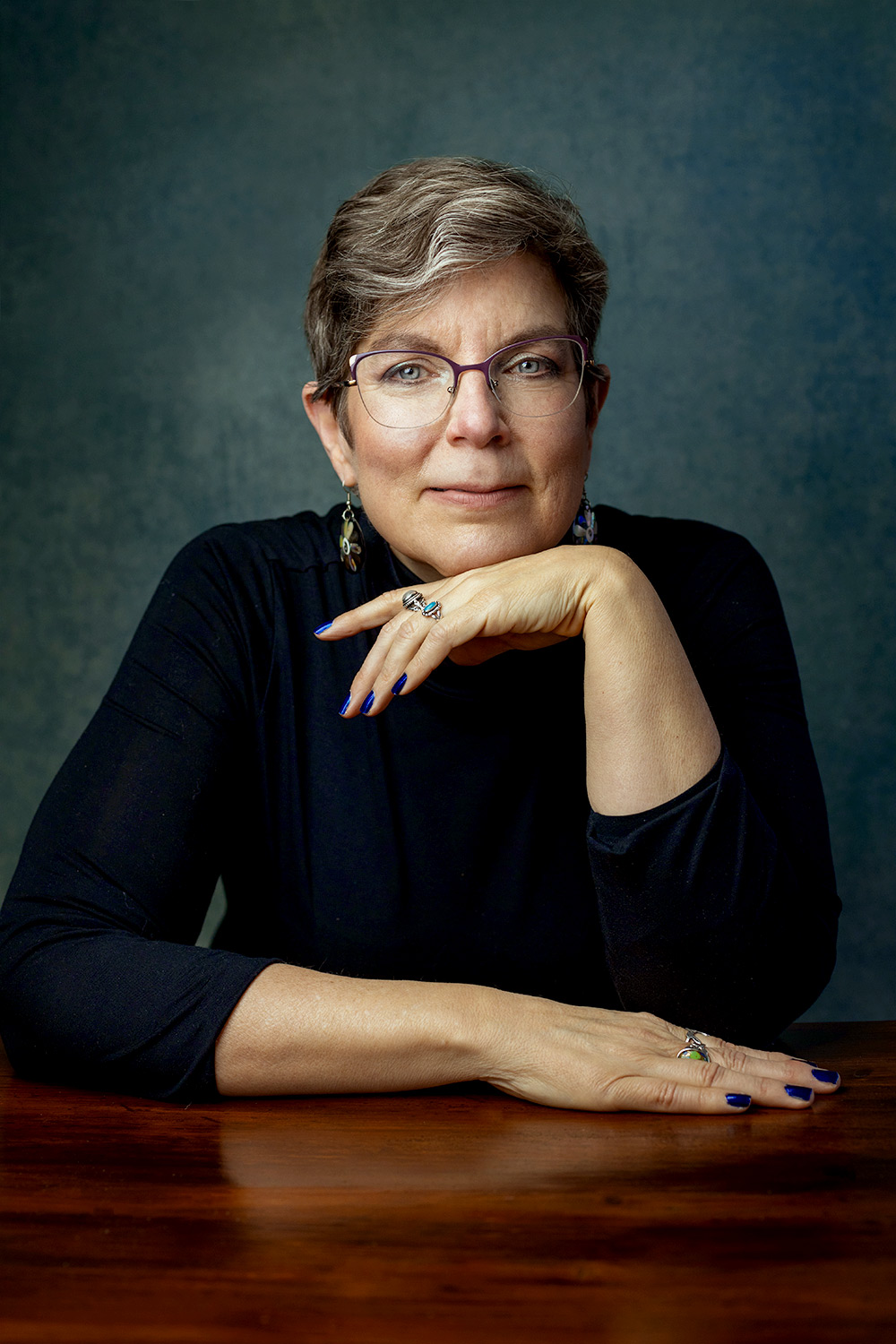
Boundaries Coach
Barb Nangle is a boundaries coach, speaker and host of the podcast, "Fragmented to Whole: Life Lessons from 12 Step Recovery." She offers a free Boundary-Building Starter Kit.
In 2015 at the age of 52, after decades of therapy and tons of self-help work in a variety of areas, Barb got into 12-step recovery. She’s been in two such fellowships since then and has changed deeply and profoundly as a result. As a former addict and people-pleasing rescuer, she empowers people to thrive and take more control over their personal and professional lives by coaching them to build healthy boundaries. She works with organizations in the helping professions, as well as women entrepreneurs to avoid burnout and reduce turnover. Her specialty is working with professional women who say yes when they really want to say no, and are so focused on others that they neglect themselves. She’s coached hundreds using her boundary-building system.